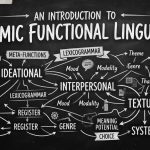

Linguistic communication requires more than ideas and language. Ideas are what we want to communicate, and language is the technology by which ideas are communicated. However, meaningful communication takes more than knowledge of vocabulary and grammar. It takes three things, which I will outline briefly in this post. These things influence the lexical and grammatical choices we make in communication.
First, the subject matter. This is what we are communicating. We can call it an idea, topic, or something else, but what it is shapes the context, which in turn allows us to select the most appropriate words to use. Imagine you talk about memory with a psychologist. You will use phrases like short-term memory and long-term memory. The same subject matter, when you talk with your ex, you would use phrases like beautiful memories and nostalgia. Then, the next day, you talk with a machine learning expert. The phrases you used when talking with the psychologist still make sense, but they carry different meanings. What matters is that the subject matter you talk about determines the words you choose.
Second, the one you talk with. You can see that you can use the same phrases short/long-term memories, with a psychologist and a machine learning expert. Yet, they mean different things. However, this has nothing to do with the person you talk with. Instead, it has something to do with the field or topic. Now, the one you talk with may influence the manner of communication. With your roommate, you can just ask, “What time is it?” However, you may be reluctant to talk to a stranger in this manner. The social distance and power you both have shape the way you talk.
Third, the way of communication. You may be wondering why you speak differently on the phone and face-to-face. Or, in texting, you make it shorter than in writing emails. We call it a mode or way of communication. In writing, for instance, we keep things clear because we understand that we almost have no chance to clarify things. In speaking, our mimicry and gestures help us build and communicate meanings, so we can talk briefly.
All these three things are called the variables of register (field, tenor, and mode). Meaningful linguistic communication is built on this principle, according to Halliday, the founder of Systemic Functional Linguistics. So, now we know that having ideas and knowing language is not enough. We need to consider the subject matter (field), the one we talk with (tenor), and the way of communication (mode).